Newel Posts: Why the Foot of Your Stairs Sets the Tone
The newel at the foot of a staircase is the first thing guests see and the piece everything else connects to.
October 27, 2026 · 4 min read
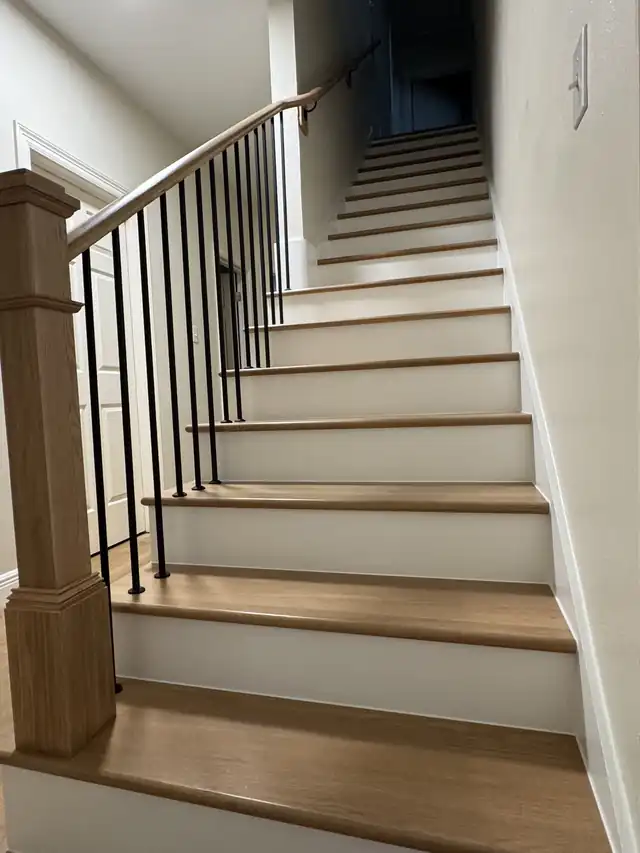
Stand at your front door and look at your stairs. Your eye goes to the bottom of the rail, to the post that anchors it. That post is the newel, and it does more work than its size suggests. It holds the handrail in place, it ends the run of balusters, and it sets the style before anyone has looked at a single step.
A tired, wobbly or mismatched newel can drag down an otherwise good stair. A strong one can make an ordinary stair feel intentional. Here is how to think about yours.
What a newel does
The newel is the heavy post at the start of a staircase, and often at turns and at the top. The handrail connects into it. If a newel is loose, the whole rail can feel loose, which is a safety problem and not just an annoyance. If it is solid, the rail feels reassuring when you grab it coming down in the dark.
Because so much connects to it, the newel is usually the first piece to decide. Once it is chosen, the rail profile and the baluster style tend to follow.
Box newels, turned newels, and square posts
A box newel is a hollow or built-up square post, often with a capped top and trim panels on the sides. It looks substantial and works well in traditional and transitional homes. The flat faces also give you the option to paint it white, which makes a handsome contrast with black iron balusters and a stained rail.
A turned newel has been shaped on a lathe, with curves, rings and a rounded top. It reads classic and a bit formal. A plain square post, without trim, is the choice for modern stairs and pairs well with horizontal bar or minimal iron.
None of these is the right answer by itself. What matters is that the newel looks like it belongs to the same house as the stair around it and the trim in the hall.
Stain matching is harder than it looks
When one newel is replaced and the rest of the stair stays, matching is the challenge. Wood from different boards takes stain differently, and an older piece has aged. The same stain applied to new oak and to a fifteen-year-old rail will not come out the same color.
The fix is usually to treat the pieces as a set. Refinish the rail and the posts together, so the old and new wood blend. Jamie Allen noticed exactly this on the new railing: "The stain was perfect, the lines/cuts were perfect." A match like that comes from test samples, patience, and a finish that is applied evenly.
- Ask to see a stain sample on the same species of wood, not a color chip.
- Look at it near the stair, with your own lighting.
- Decide between an exact match and a deliberate contrast, like a white-painted newel against a stained rail. A near miss is the one choice that never looks good.
Replacing the newel along with the rail
It is common to replace the newel post and the handrail together, especially when the balusters are changing. Richard Chapman's review of Mac Stairs says it directly: "His work in replacing our handrails, balusters and newel post was well done. All the wood was replaced and stained in 3 days." When everything is new and stained as one batch, it looks like it came with the house.
Replacing a newel means attaching a new post firmly to the floor structure below the stair. That is where the quality of the work shows. A newel that moves when you push on it, even a little, was not set properly. Test one when you see a finished stair.
The foot of the stair as a design choice
If the stair is the focus of your entry, give the bottom some attention. A wider, larger newel makes a statement. A pair of newels with a flare or curved starting step, where the first tread bulges out into the room, invites people in. A thin, plain newel says the stair is just a way to get upstairs.
Mac Stairs has built stairs with oak box newels under arched entries, white newels on long straight runs, and dark stained newels beside twisted and basket iron balusters. Each one sets a different mood, and each one was chosen to suit the house it sits in.
Ask before you commit
Not sure which post fits your stair? Text a photo of the bottom of your stairs to (469) 727-3208. Marlon will talk through the options over the phone, and a free quote follows.
Mac Stairs, (469) 727-3208
Call (469) 727-3208More articles
Swapping Wood Spindles for Iron Balusters: What Changes
Iron balusters change how a staircase looks and feels, and the rail and posts around them usually come into the conversation too.
Replacing Carpeted Stairs With Stained Treads and White Risers
Bare, stained treads with painted risers are a quick way to make a staircase look finished, but there are a few choices to make before the carpet comes up.